Showing posts with label Gary Tushaw. Show all posts
Showing posts with label Gary Tushaw. Show all posts
Tuesday, 18 October 2016
Review Ragtime
Ragtime
Book by Terrence McNally
Music by Stephen Flaherty
Lyrics by Lynn Ahrens
The Grand Illusion
http://www.charingcrosstheatre.co.uk/
If ever a musical was designed to fit the word "epic", surely Ragtime is that musical, a sweeping panorama of American life which artfully combines a child's eye view of an expansionist yet democratic, idealistic nation with complex adult concerns.
Adapted from a sprawling 1975 novel, which was followed by a 1981 movie, the musical distills the pre-First World War story into the tale of a WASP family - mother, father and little Edgar - a Jewish immigrant father and young daughter and, last but not least, a proud black musician and his lover who buy into the American dream only to suffer numerous injustices because of their race.
Its score encompasses the music of ragtime turning from the joyous to ominous, the rhythms of marching songs. soaring melodies of aspiration and love. Thom Southerland's production has many fine moments with a 24-strong cast of actor-musicians playing out the syncopated trail of ambition and tragedy.
Old and new, fictional and real life characters wend their way through and collide in the story of Ragtime filtered through the picture book and derring-do imagination of Edgar (Ethan Quinn alternating with Samuel Peterson) who pointedly also shares his first name with the writer of the original novel.
There are some crisp and visceral vocal ensembles from the first song Ragtime to the fine Getting Ready Rag led by black musician Coalhouse Walker Jr (Ako Mitchell) and the resonant New Music. Anita Louise Combe as Edgar's mother transforms from restrained wife to a person in her own right, providing one of the highlights of the show in Back To Before. As well as Seyi Omooba's solo (and professional debut) in the thrilling Till We Reach That Day.
There's a feel of pioneer America in the saloon bar set with scattered stars on the wood panelling, designed by Tom Rogers and Toots Butcher. This musical manages no mean feat in intertwining the birth of the movies, the rights of women, tabloid journalism and the growing strength of the workers' movement in America with a sprinkling of literary references.
Nevertheless with a large cast, the stage does sometimes feel over-busy and there are occasional lapses. Sitting in the third row, there were times when the mic levels disrupted the piece. This was particularly evident, despite a fine performance by Jennifer Saayeng as Coalhouse's lover Sarah, in the crescendo of one of the show's best known songs, Your Daddy's Son.
The separate ultimate fates of Sarah and Coalhouse also felt slightly diluted - Sarah's moment of tragedy by the sound levels of the ensemble and a lack of tension in Coalhouse's final act. At these times, the action and ironies needed sharper definiton.
Yet, the beauty of the score and the intelligence of the lyrics and book with its touches of humour still shine through. Even in the more seemingly peripheral role of escape artist Harry Houdini (Christopher Dickins), there is a double resonance, very subtly, both politics and entertainment, to the chains binding him.
As the show underlines it is Houdini who has the most knowledge and understanding about himself and America, "he knew he was only an illusionist". It's an amber/green light for a flawed but energetic and exciting production.

Monday, 15 August 2016
Review Allegro
Allegro
Book and Lyrics Oscar Hammerstein II
Music Richard Rodgers
Notes From A Small Town
http://southwarkplayhouse.co.uk/
A new day and a new musical - new to us, that is! Allegro, a lesser known 1947 Rogers and Hammerstein show which followed Oklahoma!, the movie musical State Fair and Carousel in their canon and before they thematically travelled outside the United States for South Pacific.
In Rodgers and Hammerstein terms, it was a flop, although still notched up a respectable 315 Broadway performances and even, according to some accounts, made a small profit, although it failed to transfer to London for a run.
Inspired in theme by Our Town, the plot follows the life of Joseph Taylor jr (Gary Tushaw), the son of a doctor (Steve Watts), in rural small town America.
In a kind of Portrait of The Medic As A Young Man (and maybe influenced by Scottish novel The Citadel), we're taken on a psychological and literal journey from Joe's birth in 1905 to his midlife crisis after he finds his medical ideals tarnished by Chicago hospital boards, trustees and big business.
And in Thom Southerland's engaging production, it feels like a transitional piece, a show deliberately exploring and willing to confront unfinished business.
After a quick Google about American politics in this period, we feel, in some ways, the trajectory of this musical with unresolved finale reflects a question mark hanging over American government at the time.
Harry S Truman had become president following FD Roosevelt's premature death and was trying to push through his "Fair Deal" with its call for universal health insurance, never enacted during his tenure, and the giving of federal aid for the construction of hospitals in poorer areas of America.
Indeed there may even be a direct political musical reference with the first song Joseph Taylor Jr reminding us of a July Garland hit, written by Harold Rome, Franklin D Roosevelt Jones.
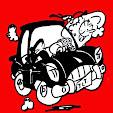
Allegro, of course, is an Italian word, both a musical term for "fast, quickly and bright" and a dance term meaning brisk or fast steps incorporating any step where a dancer jumps. The choreography for the 16-strong cast by Lee Proud is equally bright and breezy with Dean Austin leading a band of eight with keys, bass, drums, reeds, trumpet, trombone and French horn.
Played in the traverse, it dawned (we hope correctly!) on TLT and her own little motorised helpmate that the mobile ladders and configurations designed by Alexander Lamble reflected musical, as well as wooden, staves so that the cast itself becomes part of a visual musical notation.
So this innovative show with fragmented songs and choric commentary works on several levels.
A visual musical composition, a straightforward, some would say hokey tale, of a young man drawn away from his vocation to keep up an affluent lifestyle which had become far more precarious since the Wall Street Crash, the career and compromises of Rodgers and Hammerstein themselves and the politcal atmosphere of the time.
While some may criticise the lyrics of songs like"A Fellow Needs A Girl", it struck us with harder edged songs such as The Gentleman Is A Dope sung with characterful verve and vigour by Kate Bernstein as Nurse Emily West and the title song Allegro about the tempo of modern life and money, there's more to this piece than a homely fable. Juxtaposition brings irony and hope.
This is an enjoyable production of a rarely-seen piece. Emily Bull brings depth and takes the audience along with her in the role of wayward, ambitious wife Jennie while Julia J Nagel displays soaring vocals as watchful mother Marjorie.
It's perhaps not a perfect show, but then life ain't perfect either and we give Allegro an uncompromised green light for a delicately precise and tender production.
Subscribe to:
Comments (Atom)


 Posts
Posts

