Showing posts with label Sean Mathias. Show all posts
Showing posts with label Sean Mathias. Show all posts
Wednesday, 1 November 2017
The Exorcist
The Exorcist
A Play By John Pielmeier
Adapted From The Novel By William Peter Blatty
Satanic Schlock
http://www.atgtickets.com/shows/the-exorcist/phoenix-theatre/
Arrrrrrrgh! It may be past the witching hour of Halloween (it's November 1st!) but the demons still are guiding TLT's hand as she pens a review of The Exorcist. Lucky it's all on the internet because - hide your eyes if you don't want to know - the pen, instead of ink, is spurting blood ... 😱😵💀😈😈!!!!
Yes, it's The Exorcist adapted by John Pielmeier from the novel by the late William Peter Batty (no, no, it's ok, it's ok, he died at a ripe old age in a hospital earlier this year!).
The 1973 movie adaptation, with Linda Blair as the devil's victim, remains the best-known spawn of this devilish concoction, a cinematic scarefest that helped launch a thousand other diabolic cinematic franchises ... The Omen, Carrie, The Shining ...
There’s a mildly enjoyable night of schlock horror to be had in this production originating at Birmingham Rep, seemingly trundled out every Halloween.
It won't have you calling the demonic lawyers in for a breach of the Trades Descriptions' Act - as long as you're prepared, tongue-in-cheek-style, to buy into the corny horror tropes.
The special effects are nothing to scream home about and it's the occasional moments of pure physical acting, especially from Claire Louise Connolly as the possessed daughter of Jenny Seagrove's actress divorcée, which elicit the most genuine gasps from the audience and stop the giggles.
Anna Fleischle's set design has the feel of a haunted crooked tower with the action on several levels.
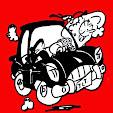
But for TLT, who has seen the movie, and her witch's cat-cum-car sidekick, who hasn’t, the Tutankhamen-curse-like side of the story was very unclear, felt irrelevant and the jumping from scene to scene broke up any previously built-up tension.
This is a play with the parts written so thinly, they seem anorexic. Many in the audience may be left puzzling as to why certain minor characters ever appear and disappear - walking out of the door rather than supernaturally.
The writer John Pielmeier and the director Sean Mathias obviously are relying on the sensational, communal effect on an audience. But, in the end, the creaky fairground effects are not so-grand-guignol.
There’s a good, solid cast of actors and Peter Bowles has the stature (that's to say height) to bring off an iconic moment when he first appears, ready to perform the exorcism.
But the supporting characters are only there to watch helplessly a sweet little girl’s initiation into the diabolic and the profane, using the recognizable tones of a well known actor as the devil.
The stage version of The Exorcist does also have (sorry, TLT couldn’t avoid mentioning this but she left it until near the end) a disturbing, presumably unintended, resonance with the re-emergence of specific Hollywood child abuse revelations and, perhaps more understandably for the time of the book's first appearance, Catholic church scandals.
The show correctly has an Adults-Only (or in 1970s’ filmspeak X certificate) label. Finally, though, however much it is a book adaptation divorced from the movie, this feels like a decidedly old-school take on a satanic celluloid classic.
TLT can't help comparing how it is shorn of the cinematic political gestures, psychological and magnified big screen thrills. It should have been hot as hell, but finally attracts a lukewarm amber light. 😈💀

Tuesday, 20 September 2016
Review No Man's Land
No Man's Land
by Harold Pinter
The Batting Order
http://www.nomanslandtheplay.com/
After the first performance of Harold Pinter's absurdist No Man's Land back in the Cold War days of 1975, the Times critic Irving Wardle said it was "... palpably the work of our best living poet in its command of language and its power to errect a coherent structure in a twilight zone of confusion and dismay."
We did not personally mine this quote from the esteemed Mr Wardle but owe its excavation to the programme introduction of director Sean Mathias's current production, which also doffs its cap to a quote from the equally esteemed Mr Billington from that time, 'a mixture of "admiration, respect and bewilderment". Ah, those heady days, when print was king and the word blog would have been viewed as some kind of unforgiveable newspaper misprint!
All of which is to say that No Man's Land, we would be presumptuous enough to believe, is very much a product of its time, a class system, a literary and Oxbridge hierachy. It's still got heft and bite. However it's a slow burner for current audiences, now when surreal humour and intricate power play has entered mainstream television and internet.
Step into the breach, Sir Patrick Stewart as eminent man of letters, Hirst, and Sir Ian McKellen as Spooner, a dishevelled lesser poet. Spooner enters the twilight zone, after a chance encounter on Hampstead Heath - ho, hum - and an invitation back for one - or several - drinks.
The twilight zone turns out to be a huge circular domed drinking room with panelled walls, designed by Stephen Brimson Lewis, within Hirst's North London abode. Up above we see the the night outline of tree tops against the transparent roof. Strangely it reminded us of a space ship come to earth in what seems to be Hampstead. Perhaps not unusual though for some individually commissioned Hampstead architecture of the time. The room almost empty in its luxury, aside from a padded leather chair and some other sparse furnishings.
The two trade stories and memories. Yet we are never sure about them. Are they true recollections coloured by one-upmanship? Spooner, apparently reduced to collecting glasses in a pub for a pittance, could be desperate to keep his own end up with a university contemporary. Or he could be exercising literary skills, with a liberal amount of dirty mindedness, in a competitive manner, somewhat reminiscent, it seemed to us, of Jean Genet's "The Maids".
There's a rhythmic, musical feel as the lines jump back and forth between the pair of elderly gents as part of their mind games and twilight zone competition. But it's not just a two hander.
Spooner, after leaving behind rivalry with Hirst for the possibility of a position in his household, suddenly finds different competition. It appears in the shape of Hirst's male secretary or "amanuensis", John "Jack" Foster (Damien Molony) and manservant cum bodyguard Briggs (Owen Teale) and a whole new generation of posturing.
Pinter used the names of cricketers for his characters, carefully picked. Hirst a Yorkshire cricketer, a "player" rather than a "gentleman" who first worked as a weaver and in a dyeing firm before becoming known for cricket and his swing bowling. Spooner, a public school-educated Lancashire man and celebrated for his batting prowess. Foster, another public schoolboy, England captain and middle order batsman. Finally Briggs, a professional cricketer and noted spin bowler, who crossed over from Yorkshire to Lancashire.
So we may gasp and be left bewildered at the foresight of Harold Pinter using the word "Google" in his script. However, a passing knowledge of cricket's googly will make this an accidental glimpse of future technology. Continuing this glossary, we should add that, less cryptically, Jack Straw's Castle was then a listed pub (now luxury apartments since 2002 closure), not some citadel of a future and somewhat controversial Home, Foreign and Justice Secretary.
Just to let you gen up before you go - for you surely will go, like us, to see two legends of British acting at full throttle in a classic play, matched with Game Of Throne's Teale as Briggs and Molony as Foster. The latter is all set to step into the literary shoes of Hirst - if Spooner does not hinder his plans.
The lines are thrown like skilfully bowled cricket balls and equally skilfully batted away. We still feel The Caretaker, Betrayal, The Dumb Waiter (the three Pinter plays we have previously seen) are more accessible. Yet there's an undoubted power to the twilight zone of No Man's Land.
Written at a moment when the reach of literary magazines, funded by who knows what or who, the left or right wing Oxbridge set was on the cusp of the wane. And a Hackney lad, the son of a Jewish ladies' tailor and a housewife, a cricket fanatic, could eventually be thought of as a modern Shakespeare.
It's an upper range amber light from TLT and her own motorised amanuensis for an occasion they wouldn't have missed, even for the complete editions of Wisden.
Subscribe to:
Posts (Atom)


 Posts
Posts

