Showing posts with label Eleanor Wyld. Show all posts
Showing posts with label Eleanor Wyld. Show all posts
Thursday, 2 November 2017
Review The Invisible Man
The Invisible Man
by Clem Garritty
adapted from the novella by HG Wells
The Vanishing Point
http://www.queens-theatre.co.uk/
This loose new adaptation of an HG Wells' novella starts off as a promising attempt to fuse themes from a number of different horror tales into an adventurous tale of scientific hubris, but ultimately falls at the final hurdle.
Jack Griffin (Matthew Spencer), the son of a college Dean, is a young Victorian scientist who believes his experiments will lead to recognition, fame and fortune.
Gradually, though, lack of understanding from family and friends and the axing of his funding, turns his laboratory research into a bitter vendetta and obsession.
He alienates those around him including a suffragette colleague (Eleanor Wyld) on whom he pins his romantic hopes. However he is truly developing a miraculous formula - with the potential for good and evil, as well as unintended consequences.
Directed by Ryan McBryde, there are many enjoyable elements in The Invisible Man, especially in the first act.
The integration of modern themes works pretty well and, despite some clunkily literal lyrics, the inclusion of actor musicians does add to the atmosphere and also help the scene transitions on the large Queen's Theatre stage.
Purists may object to the inclusion of a female love interest. However it has long been the custom in earlier screen adaptations and the invention of suffragette Lucy has a resonance with other works by science fiction pioneer HG Wells.
Wells's own brand of feminism is found in novels such as Ann Veronica, although it also should be said, it ran side by side with an extremely active adulterous sex life and the fathering of at least one illegitimate child.
The Invisible Man's first act does have hints of a certain unwieldy wordiness, perhaps trying to keep rather too much of the writer's novelistic scientific explanation
Even so, despite these few stutters, the story manages to gallop along along at a lick with a double narrative time scale, nicely combining a televisual feel with a fully fledged stage drama.
It's in the second act that this version of the classic Wells tale comes a cropper, losing its momentum at what should be some of its most exciting moments.
The thought did then occur that adaptor Clem Garritty's - and songwriter Rebecca Applin's - The Invisible Man is really a musical manqué, with uncertainty of tone and lengthy, laboured explanations suddenly filling the vacuum instead of songs.
It's a shame that the narrative energy drifted off after such an engrossing start.
Lily Arnold's set of browns and grays combines pub doors and research filing cabinets with sliding sets for a tiled laboratory and a rented mahogany village room. Along with Nic Farnham's lighting and Applin's sound design, pace is maintained in a muscular first act.
Maybe it could have done with a bit more spectactular illusion (magic consultant - that's a title not an adjective! - John Bulleid) and been a bit tighter, but this isn't initially a major flaw in a ripping yarn.
Additionally one could feel the collective audience mind ticking as plausible intellectual and mercenary motivations for the actions of the characters were laid before them.
It's ironically in some of the visually cleverest, most stylized moments that this production comes apart.
Jack Griffin, increasingly demented both when visible and invisible, a kind of English Rashkolnikov who believes he can get away with murder, develops the visceral look of a silent film villain.
There are glimpses of Jack The Ripper, Sweeney Todd and Frankenstein in the drama's styles, but it all goes increasingly awry. What should be a desperate rooftop encounter drags, as words rain heavily down rather than the action being pushed forward.
The different narrative time scales also start to tell against the play, with the audience left confused for just a tad too long before the pay-off explanation comes.
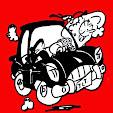
While, after the first act, TLT and her own mad scientist automotive sidekick thought The Invisible Man might be an exciting family show, by the end it feels far too long and runs out of steam.
Perhaps the bandages were taken off too soon and it's a show put on before it was ready or, as previously indicated, the bare bones of a darkish musical.
However our own visible critical twosome are loathe to entirely write it off - with further development and tightening up, this dramatic experiment might work far better. Mainly for the first act, it's an amber/green light.

Wednesday, 14 September 2016
Review Dr Faustus
Dr Faustus
by Christopher Marlowe
Trading Futures
https://www.rsc.org.uk/
What kind of academic would Dr Faustus be in the modern age? OK, don't tell us, he's just a fictional character, a chap from a German sixteenth century chapbook who sold his soul. We know that!
But watching the RSC's version of Christopher Marlowe's Dr Faustus directed by Maria Aberg, we were put in mind of those academics, wittingly or unwittingly, on the side of the bad angels when they promoted their particular brand of financial models before credit came to the crunch in 2008.
The large black box stage is strewn with boxes of the sort Lehman Brothers' employees used to pack up their belongings when exiting the building and turning off the lights in that fateful year.
In slick black suits two men have a face off, mirror images of each other with burning matches held between two fingers of their hand. The one who has the chance, which some might construe as skill, to hold the match which extinguishes first is Dr Faustus, the other taking on the role of the Lucifer's emissary Mephistophilis.
On Barbican press night, Sandy Grierson drew the short flame as Dr Faustus, Oliver Ryan as white suited, bare-chested footpad Mephistophilis and the road to soul crunch began. As if in some kind of unemployed post Lehman's limbo, Faustus sat in his study cum studio attended by gray bearded donnish Wagner (Nicholas Lumley), of a previoius generation, less slick in his knitted tank top.
Meanwhile magician mates Valdes ( Will Bliss) and Corneilus (John Cummins) egg on their friend to achieve the heights. The "bills"of Faustus, TLT and her automotive non-algorithmic engine ruminated, took on the guise of future trades. And the means of reaching his aspirations became more and more outlandish, fuelled by swigs of Vodka and who knows what other substances.
He strips off his city slicker accoutrements down to vest and pants, becoming part bovver boy skinhead, part punk. When he uses his shirt to dip in white paint and in a frenzy of creation draws a mystic pentangle in a circle, spattered with paint, he's almost like some Faustian Jackson Pollock on the road to creation and damnation.
It's certainly a stripped down one-act Faustus, the comic subplots discarded. So it may be 24 years of magical excess, absolute power, sating the thirst for knowledge, a contract signed with his blood. Or it could be a self-harming down-and-out hallucinating during one violent, abusive night.
Huge projections emerge on the backcloth, vertical neon lights hang down like stalactities and discordant chords of a band like some tune of the spheres gone wrong make this an decidedly untraditional Faustus designed by Naomie Dawson with Orlando Gough composing the music.
Lucifer (Eleanor Wyld) is a blonde nightclub host in a white trouser suit and heels with her parade of freaks, the seven deadly sins: High-kicking cat-suited Pride (Theo Fraser-Steele), a Tim Burton-type Covetousness (Rosa Robson) on stilts and outsize tree branch crutches; Black and white middle-aged girl Wrath (Ruth Everett) wields rapiers like Edward Scissorhands; Envy (Bathsheba Piepe) has a black executioner's hood and sexy body corset and swirling skirt ; Gluttony (Gabriel Fleary) has an obscene body with huge overhanging stomach and a hog's head while Sloth (Richard Leeming) slithers on the ground and Lechery (Natey Jones) is a bearded ladyman in white sparkly drag.
Black coated and homburg suited faceless demons and students rise up and surround Faust likr shades of Michael Jackson zombies. Meanwhile, friars seem to come out of a Star Wars film set. Drum beats ratchet up the tension. It's a world skewed where everything is out of season like the disembodied grapes which drop from the ceiling as a gift for the lascivious Duchess of Vanhott (Amy Rockson). But it's strangely resonant in our out-of-season supermarket age.
This is certainly a Faustus to conjure with, imprinting numerous outlandish, weird images on the audience's mind, a Faustus that loses the plot.
There's a Trainspotting kind of energy and a doubleness, as we've noted, that could be the conjurer and university doctor Faustus or equally a drug-den hallucination with real-life consequences when Helen of Troy (Jade Croot) is transformed into a vulnerable child.
It certainly made a visual impression on us, even if the tale of Faustus's understandable mission to gain knowledge, albeit at the expense of his soul, felt somewhat lost. Your own devilish duo gives this secular Faust a neon amber light.
Subscribe to:
Posts (Atom)


 Posts
Posts

