Showing posts with label Romola Garai. Show all posts
Showing posts with label Romola Garai. Show all posts
Thursday, 13 July 2017
Review Queen Anne
Francis Beckett delights in a play on Britain's last Stuart monarch which is both perceptive about its two real-life heroines and a tremendous theatrical success.
Queen Anne
by Helen Edmundson
A Right Royal Drama
http://www.trh.co.uk/
Queen Anne was in many ways a tragic figure. She had seventeen pregnancies, but gave birth to only three live children, none of whom lived beyond the age of eleven. Her biographer Anne Somerset writes in the theatre programme that she was “poorly educated, chronically shy and disabled by agonising arthritic attacks.”
She did her best nonetheless to fulfil the duties imposed on her by the iron laws of heredity, and to cope with the vigorous and vitriolic political atmosphere of the time.
Indeed, Helen Edmundson’s play opens with a guilty pleasure, an appallingly hurtful but hilarious satirical song about her inability to have children. This has her trying to deliver a child, but delivering only something unnamed which apparently rhymes with art.
The drama focusses on her relationship with Sarah, wife of John Churchill, the first Duke of Marlborough, from whom Sir Winston Churchill was descended. Sarah was the opposite of Anne: clever, beautiful, confident, ambitious. The two were the closest of friends, then the bitterest of enemies.
This tense, tightly written and tautly plotted play charts their relationship. Its respect for the known facts would surely win the approval of Hilary Mantel, but it also weaves them into a gripping yet often very funny play.
From the start we are on the side of the needy and manipulative Anne, yet never cease to care about what happens to the brave and manipulative Sarah, whose sophisticated political antennae seem to abandon her after the death of her son.
The script has not a single unnecessary word in it – nothing is spelled out if it can be left to the audience to work it out – and Natalie Abrahami’s direction in this RSC production reflects that economy. Hannah Clark’s set is splendid yet discreet. It knows its place. It is there to supplement the dialogue, not substitute for it.
Yet it is the two central performances on which the evening stands or falls - Emma Cunniffe’s Anne and Romola Garai’s Sarah - and they are both wonderful.
Cunniffe and Garai capture both the humanity and the political power struggle in a way that easily stands comparison with Mark Rylance’s Cromwell in Mantel's Wolf Hall.
This is one of the best and most gripping evenings in the theatre I can remember for a long time. That's not just because I know a little of the history. For I took with me a South African cousin who knew nothing of Queen Anne, and she was as gripped by the human and political drama as I was. A green light to rush to the Theatre Royal Haymarket.

Thursday, 8 October 2015
Review Measure For Measure
Measure For Measure
by William Shakespeare
They Tried To Make Me Go To Rehab
http://www.youngvic.org/whats-on/measure-for-measure
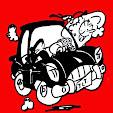
First of all, TLT and her motorised equerry should make it - beep, beep! - clear, this was a preview.
http://www.youngvic.org/whats-on/measure-for-measure
First of all, TLT and her motorised equerry should make it - beep, beep! - clear, this was a preview.
Duke Vincentio (Zubin Varla) surfaces from a warehouse sea
of blow up sex dolls on to the triptych-framed stage (design Miriam Buether) to announce
austerity has come to Vienna's brothels.
Why, we never quite get to know. Maybe the lender
country has called in its loans after the (ahem!) bottom dropped out of the consumer
market for their goods, hence the surfeit of scarecrow-like sex dolls?!
This is a heavily edited (dramaturge Zoë
Svendson), no-interval Measure For Measure directed by Joe Hill-Gibbins
with Varla as its magnificent lynchpin. Part
art installation/performance arts, part US police procedural or thriller, part
(or maybe full) crack den as well as movie studio complete with omnipresent
over-the-shoulder cameras.
A surfeit also of video shot - maybe for future
transmission, maybe for archiving, maybe
for the cutting room floor. Pulsating sound (Paul Arditti) out of TV drama
backs the action.
Duke Vincentio, though middle-aged, seems only to just have emerged from a years' long house
rave/orgy. There is no Mistress Overdone (cutting room floor obviously!) but the Duke is literally undone at
the beginning. And, having buttoned
himself up, he appoints the next generation to do the dirty work of cleaning up
the city.
Angelo (Paul Ready), media-ready, dresses (credibly) more like a head croupier or an estate agent than a puritan to head the crackdown on lechery but slyly smarmy, sharing secrets, from the first: " Always obedient to your grace's will, I come to know your pleasure ..."
Angelo (Paul Ready), media-ready, dresses (credibly) more like a head croupier or an estate agent than a puritan to head the crackdown on lechery but slyly smarmy, sharing secrets, from the first: " Always obedient to your grace's will, I come to know your pleasure ..."
Meanwhile Escalus (Sarah Malin), all efficient suit and
high heels, hovers like an advisor from The West Wing or executive seconded
from a corporation in a state where execution can take place by "private
message" and prisons are hidden behind sliding doors at the back of
government offices.
This is a hit-and-miss surveillance state. After the Duke
dons his Friar disguise, the confession box becomes a video box with faces
looming large on projections (video: Chris Kondek).
And is that a state cop or
from a private security firm (Hammed Animashaun)? Or even an out-of-work actor
who fits the role and has the uniform with large letters PROVOST on the back
and an American accent out of police procedurals?
Isabella (Romola Garai), dressed in a blue shift and
white triangular scarf covering her head, has almost stepped out of a Vermeer
painting into the stage frame, although her previous ostentatious bird-like
swoop into prayer may also indicate an awareness of the cameras.
With a
"That's well-said", it's as if
Angelo finds her fresh PR techniques of persuasion, rather than just her body and his power, the turning point sexy turn-on.
More problematic, as
TLT noticed also in The Globe version of the same play, is to sustain
any erotic tension and follow the arguments once the characters of Angelo and
Isabella are established and the novice nun argues her case.
While this scene is
nicely bookended with naturalistic touches, we noticed a dip in attention in
the audience. This may have been a production waiting to bed down in preview and
find a rhythm but two productions with
the same flaw doesn't feel like a coincidence - something lacking in the productions rather than text.
After all, the deputy ruler of Vienna is blackmailing Isabella for sex
and even when he's over her like a dog on heat on all fours, it feels
just - well - choreographed.
The close up projections also have the effect of flattening the emotion
at crucial points.
Nevertheless, there's some beautiful verse speaking and
the video projections emphasize the rhetorical nature of Shakespeare's Vienna.
Only
in Angelo's soliloquies and Julietta (Natalie Simpson), made pregnant out of wedlock by Isabella's
brother Claudio and shying away from cameras, is the public declamation more
suppressed in a culture swinging like a pendulum between private pleasures and
public naming and shaming.
And the chiaroscuro lighting (lighting James Farncombe) on Isabella during the "fear of death" speech of her brother Claudio (Ivanno Jeremiah)
as they sit on the prison ground, with Claudio intently watching her reactions, does
summon something new from the text.
Part of the understated key to this production is surely the
casting of a woman as Escalus, carrying out the orders of the Duke manoeuvring
through the play. One wonders, since there is an ambitious woman who does the
business and is prepared to let citizens die, whether in different
circumstances Isabella would have done
the same?
Soft-spoken Scottish Lucio (John MacKay), the pimp turned
hangman, seems equally at home directing, tutoring and prompting Isabella, at
times a crouching animal at the side watching forensically the action.
Pompey (Tom Edden) channels 70s' Huggy Bear and Woody Allen, as both he and the Provost
seem imports from American TV into Vienna.
It ends with an uneasy family portrait with two of the
protagonists chased out of the picture to jail. One is left to wonder whether the
elaborate charade was only to get rid of those characters without the
possiblity of blackmail and to contain Angelo's power.
It's a flashy, thought-through, fast-moving production for the Netflix generation with Zubin Varla managing affairs like some Ducal Andy Warhol. There is something lost in the execution but also something found. We've had the pilot. Maybe we'll have the series - the Duke and his young bride as squabbling crime investigators, complete with sidekicks, in Vienna?! An amber light.
CORRECTION The Duke, was played by Zubin Varla not as previously published ...
Subscribe to:
Posts (Atom)


 Posts
Posts

